





Medical Disclaimer: This article is for informational purposes only and does not constitute medical advice. Always consult a qualified healthcare professional before starting any treatment or making changes to your care plan.
Summary of the article
Arthritis in fingers causes pain, stiffness, and swelling — especially in the morning.
Osteoarthritis (OA) and rheumatoid arthritis (RA) are the two most common types. They feel similar but work differently.
Typing and mouse use put repeated stress on already-inflamed joints — this makes symptoms worse over time.
Early signs include stiffness after rest, mild swelling, and occasional aching near the knuckles.
Practical protection strategies: ergonomic gear, regular breaks, gentle stretching, keyboard shortcuts, and voice typing.
Voice typing tools like Voicy let you keep working without putting strain on your fingers.
Treatment options include OTC medications, physical therapy, and splints — see your doctor for a proper plan.
Your fingers hurt. Not just at the end of a long day — they hurt first thing in the morning before you even sit down at your desk. The joints feel stiff and swollen. Typing feels like work in the worst way.
If this sounds familiar, you might be dealing with arthritis in your fingers. It's more common than people think — and it can seriously affect how well you work at a computer.
This guide covers what finger arthritis feels like, how to spot it early, why typing makes it worse, and what you can do to protect your hands while staying productive. We'll also cover your treatment options and when it's time to call your doctor. This isn't a replacement for medical care — but it is a starting point.
For more on this topic, see our full guide on typing with arthritis.
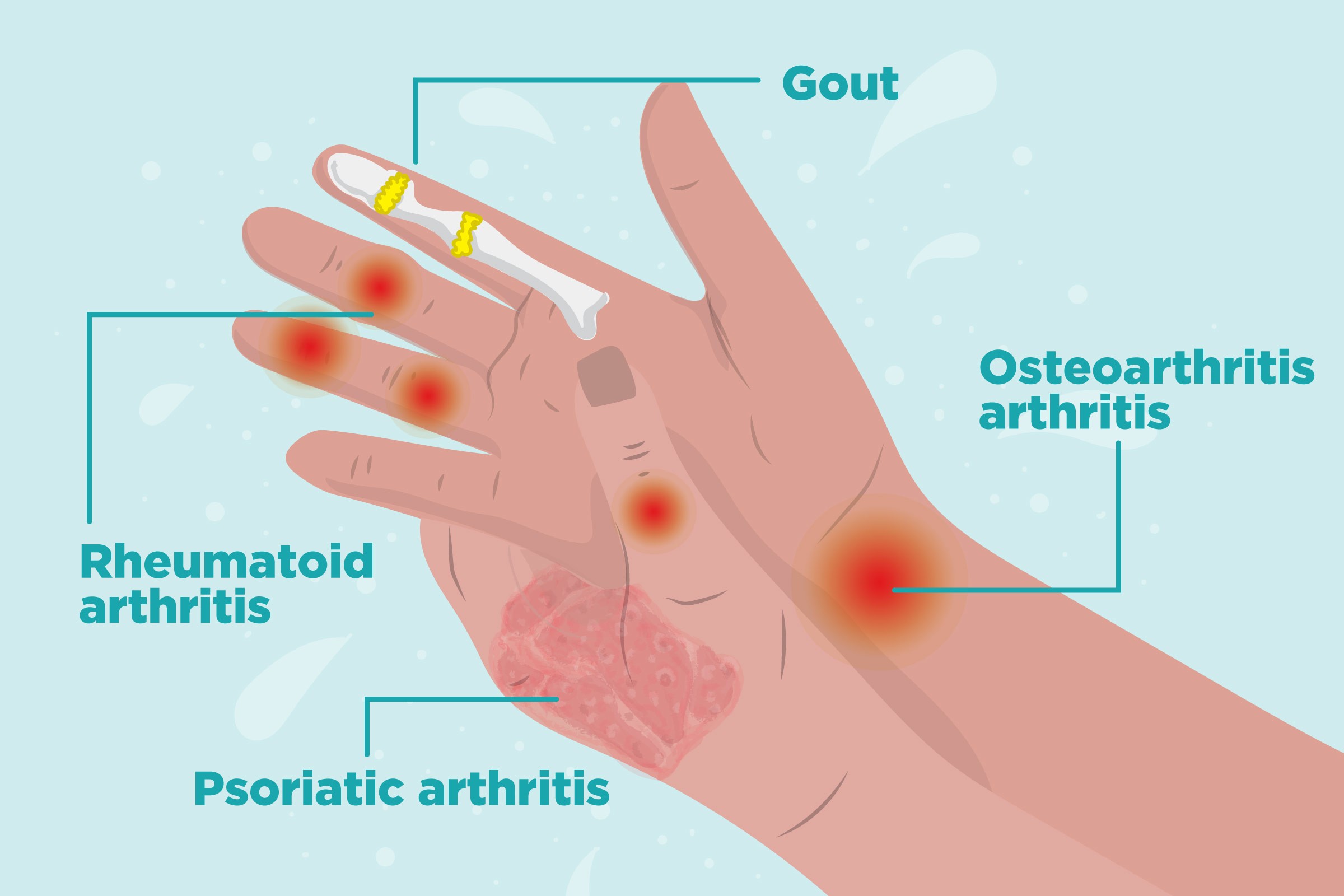
What Does Arthritis in Fingers Feel Like?
Arthritis isn't one thing. It's a group of conditions that all cause joint inflammation. But in the fingers, they tend to feel similar — at least at first.
Here are the most common symptoms people notice:
Pain or aching in the finger joints, especially during or after use
Stiffness — fingers that feel locked or slow, particularly in the morning
Swelling around one or more knuckles
Reduced grip strength — jars feel impossible to open, pens hard to hold
A grinding sensation when bending your fingers (more common in OA)
Warmth or redness around a joint (more common in RA)
Osteoarthritis (OA) vs. Rheumatoid Arthritis (RA)
These are the two types you'll hear about most. They both affect finger joints, but they have different causes.
Osteoarthritis (OA) is caused by wear and tear. The cartilage between your joints breaks down over time. It often shows up in the joints closest to your fingertips or the middle joints of your fingers. It tends to get worse with use and feel better with rest.
Rheumatoid arthritis (RA) is an autoimmune condition. Your immune system attacks your own joint tissue. RA often affects both hands at the same time and comes with more systemic symptoms — fatigue, fever, general feeling of being unwell. Morning stiffness with RA can last more than an hour.
You can't tell which one you have based on symptoms alone. That's a job for a doctor and some tests. But knowing the difference matters because the treatments are different.
Learn more from the Arthritis Foundation's guide to osteoarthritis and their overview of rheumatoid arthritis.
Early Signs of Arthritis in Fingers
Catching arthritis early gives you more options. But the early signs are easy to shrug off — it's tempting to blame cold weather or too much typing. Here's what to actually watch for.
Warning Signs Worth Paying Attention To
Morning stiffness that takes more than 30 minutes to ease up — this is one of the clearest early signals
Mild swelling around a knuckle that seems to come and go
Occasional deep aching in a joint, even when you haven't been using your hand much
One finger joint that always seems puffy compared to the matching joint on your other hand
Fatigue in your hands after tasks that used to feel easy
Heberden's and Bouchard's Nodes
As OA progresses, you may notice small bony bumps forming on your fingers. Heberden's nodes appear at the joints closest to your fingertips. Bouchard's nodes show up at the middle joints. These aren't dangerous on their own, but they're a sign that cartilage is breaking down and bone spurs are forming.
If you spot these bumps — especially if they're painful or growing — that's a good reason to see a rheumatologist or your primary care doctor. Mayo Clinic has a detailed breakdown of OA symptoms and what to expect.
Don't Wait Too Long
Early arthritis in fingers responds better to treatment than advanced stages. If you catch it while it's still mild, you have more tools available — from lifestyle changes to targeted physical therapy. Waiting until the pain is constant makes management harder.
How Finger Arthritis Affects Typing and Computer Work
Typing on a keyboard asks a lot of your fingers. You're hitting keys hundreds of times an hour, using a range of angles and forces. When your finger joints are already inflamed, that repetitive motion is a problem.
Why Keyboards Are Hard on Arthritic Fingers
Standard flat keyboards put your fingers in a position that requires constant small muscle contractions. Each keystroke puts pressure directly on the joints. Over a long workday, that adds up fast.
Here's what finger arthritis does to computer workers specifically:
Pain spikes during or after typing — even 20 minutes at the keyboard can cause a flare
Slower typing speed — stiff joints don't respond as quickly, and you start avoiding certain keys
Typos go up — reduced fine motor control means fingers miss or skip keys
Grip problems affect the mouse — clicking and dragging become painful too
Holding your phone hurts — the same small joints are involved in scrolling and tapping
Mental fatigue increases — when typing hurts, you spend cognitive energy managing pain instead of doing your work
It Often Builds Gradually
Most people don't notice the problem until it's already affecting their output. They start taking more breaks, writing shorter emails, or avoiding certain tasks entirely. By the time it's obvious, they've often been compensating for months.
If you're finding yourself dreading long writing sessions, or if you feel notable relief on days you use your keyboard less — that's a pattern worth examining.
We also cover this in our guide on how to relieve wrist pain from typing, which shares related strategies.
5 Ways to Protect Your Fingers While Working
You can't always take a break from your job. But you can reduce how much strain your fingers take during the workday. These five approaches are practical, low-cost, and backed by general occupational health guidance.
1. Switch to an Ergonomic Keyboard
A standard keyboard forces your fingers into a flat, extended position. Ergonomic keyboards — split designs, tented boards, or ortholinear layouts — let your hands sit at a more natural angle. This reduces joint stress over time.
Look for keyboards with light actuation force (you don't want to press hard to register a keypress) and good key spacing so your fingers don't strain to reach.
2. Use Keyboard Shortcuts for Everything
Every time you reach for the mouse, you're adding more joint movement. Learning keyboard shortcuts for your most common actions can cut that significantly. Copy/paste, switching tabs, navigating menus — most of this can be done without touching a mouse at all.
Text expanders (tools that auto-complete long phrases) are also worth exploring. Type a short code like ;addr and your full address fills in automatically.
3. Take Micro-Breaks Every 20–30 Minutes
Sustained typing without breaks is one of the fastest ways to aggravate inflamed joints. Set a timer. Every 20–30 minutes, stop and let your hands rest for 2–3 minutes. That's not a big ask, and it makes a real difference over a full workday.
During breaks, shake your hands gently and let your fingers hang loose. Don't clench or stretch aggressively — just let them rest.
4. Do Gentle Finger Exercises
This might sound counterintuitive, but gentle movement helps. Exercises designed for arthritis can improve circulation, maintain range of motion, and reduce stiffness. The key word is gentle — we're not talking about resistance training.
Examples include slow finger curls, gentle thumb circles, and soft fist-making exercises. See our full list in the guide on exercises to prevent carpal tunnel, which covers many of the same movements used for arthritis management.
Ask your doctor or physical therapist to recommend specific exercises for your situation.
5. Use Voice Typing to Rest Your Fingers
The most effective way to protect your fingers is to use them less. Voice typing lets you compose emails, write documents, and take notes without ever touching a keyboard.
This isn't just a workaround — many people with finger arthritis find that voice typing becomes their primary input method. It's faster than hunting-and-pecking with painful joints, and it lets you keep working through flare-ups.
Voice Typing: Give Your Fingers a Break
If you type for work, voice typing isn't optional anymore — it's a real productivity tool. And for people with arthritis in their fingers, it can be the difference between a productive day and one spent in pain.
Voicy works across Mac, Windows, and browser. You speak, and it types — into any app, any text field, any document. There's no switching apps or copying and pasting. You just talk.
It works well for emails, reports, Slack messages, and longer writing tasks. If you're already spending part of your day avoiding the keyboard because it hurts, a voice typing tool is worth trying. Voicy offers a free trial so you can test it before committing.
For more on this use case, see our detailed guide on speech-to-text for carpal tunnel — the workflow overlaps closely with arthritis management.
Treatment Options for Finger Arthritis
Note: This is a general overview only. Talk to your doctor before starting any treatment.
Finger arthritis is manageable, especially when caught early. Treatment depends on which type you have (OA vs. RA), how severe it is, and your overall health. Here's a brief overview of what's typically available.
Over-the-Counter (OTC) Options
For mild to moderate pain, NSAIDs like ibuprofen (Advil, Motrin) or naproxen (Aleve) can help reduce both pain and inflammation. Acetaminophen (Tylenol) can help with pain but doesn't address inflammation. Topical creams containing diclofenac or capsaicin can also provide localized relief.
Don't use these long-term without medical guidance — NSAIDs in particular carry risks with extended use.
Physical Therapy
A physical or occupational therapist can build you a custom exercise and protection program. This might include targeted exercises, joint protection techniques, splinting guidance, and advice on modifying how you use your hands at work.
PT is often one of the most effective long-term strategies — not just for pain relief, but for maintaining function.
Splints and Braces
Splints support the joint and limit movement that causes pain. They're especially useful at night (when you might unconsciously clench your hand) or during tasks that stress the fingers. Your doctor or OT can recommend the right type for your specific joints.
Prescription Medications and Injections
For RA, disease-modifying antirheumatic drugs (DMARDs) can slow joint damage. Corticosteroid injections can reduce inflammation in a specific joint. These require a doctor's prescription and monitoring.
For a full overview of treatment options, the Cleveland Clinic's guide to hand arthritis is a solid resource.
When to See a Doctor
Some finger discomfort is normal after heavy computer use. But certain signs shouldn't be ignored. See a doctor if:
Joint pain or swelling lasts more than a few weeks without improvement
Morning stiffness regularly takes longer than 30–45 minutes to ease
You notice your joints changing shape or developing bumps (nodes)
The pain is waking you up at night
Both hands are affected at the same time (possible RA signal)
You have other symptoms alongside joint pain — fatigue, fever, or rash
OTC medications aren't touching the pain anymore
If you're unsure, see your primary care doctor first. They can refer you to a rheumatologist if needed. Getting the right diagnosis matters — RA and OA require different treatments, and catching RA early can prevent serious joint damage.
Frequently Asked Questions
What are the first signs of arthritis in fingers?
The earliest signs are usually morning stiffness (fingers that take a while to loosen up), mild swelling around a knuckle, and a dull ache after using your hands. Many people also notice their grip getting weaker over time.
Can typing cause arthritis in fingers?
Typing alone doesn't cause arthritis — arthritis has underlying causes like genetics, age, and immune system issues. But repetitive typing can worsen existing arthritis, trigger flare-ups, and speed up joint wear in people already at risk.
What does early arthritis in fingers look like?
Early on, you might see slight swelling around one or two knuckles, or notice a joint that looks slightly puffier than normal. Bony bumps (Heberden's or Bouchard's nodes) typically appear later as OA progresses.
How do I type with arthritic fingers?
Use an ergonomic keyboard with light key switches, take frequent micro-breaks, and learn keyboard shortcuts to reduce mouse use. Many people also combine typing with voice input — dictating emails and long documents to reduce finger strain.
What is the best treatment for arthritis in fingers?
It depends on the type and severity. Common approaches include OTC anti-inflammatory medications, physical or occupational therapy, splints, and in some cases prescription medications. Speak with your doctor to get a plan based on your specific situation.
Is finger arthritis the same as carpal tunnel syndrome?
No — they're different conditions. Carpal tunnel syndrome involves nerve compression at the wrist. Arthritis involves joint inflammation or degeneration. But both can cause hand pain during computer work, and some people have both at once.
Can finger arthritis be reversed?
Not completely. Joint damage from OA can't be reversed once it's happened. But progression can often be slowed with the right treatment, and symptoms can be managed effectively. RA can go into remission with proper medical treatment.
Does voice typing help people with arthritis?
Yes — it's one of the most practical adaptations for computer workers with finger arthritis. Voice typing lets you compose text without any finger strain. It's especially helpful during flare-ups when typing is painful but you still need to get work done.


