
Summary of the article
Voicy - Best for therapists who want fast voice dictation across Mac, Windows, browser apps, and admin tools.
Freed - Best for ambient session documentation and visit summaries.
Mentalyc - Best for therapy-specific note formats and practice-focused workflows.
Upheal - Best for session recording, transcript review, and supervision workflows.
AutoNotes - Best for turning short spoken recaps into structured notes.
Heidi Health - Best for cross-specialty ambient documentation with mental health support.
Dragon Medical One - Best for clinicians who need enterprise-grade medical dictation.
If you are a psychologist or therapist, the best dictation software is not always the tool with the fanciest AI. It is the one that fits how you actually work: session notes, treatment summaries, letters, insurance reports, intake forms, and all the little admin tasks between sessions.
Some tools are built for live session capture. Others are better for dictating your recap after the session. A few are strongest outside the therapy room, where you need to move quickly in Google Docs, Notion, email, or ChatGPT. This list covers both sides, clinical documentation and everyday admin.
How we chose the best dictation software for therapists
We looked at therapist-focused AI note takers, medical dictation tools, and general voice dictation apps that work well for documentation-heavy jobs. We compared workflow fit, note quality, privacy positioning, platform flexibility, and how much cleanup the draft usually needs.
We also reviewed current competitor pages ranking for therapist dictation and AI therapy notes. Most of them push one narrow workflow, usually ambient session capture. That leaves a gap for therapists who want a simpler option for progress notes, follow-up emails, referral letters, and admin work outside the EHR.
What therapists should look for before choosing a tool
Capture style: live ambient recording, post-session dictation, or quick voice typing everywhere.
Editing burden: some tools save time only if you still spend 10 minutes fixing each note.
Platform coverage: many therapists work across an EHR, email, documents, and browser tools.
Privacy and compliance: check BAAs, data retention, and whether recordings are stored.
Use case fit: session notes are one job, admin work is another.
The best dictation software for psychologists and therapists
1. Voicy
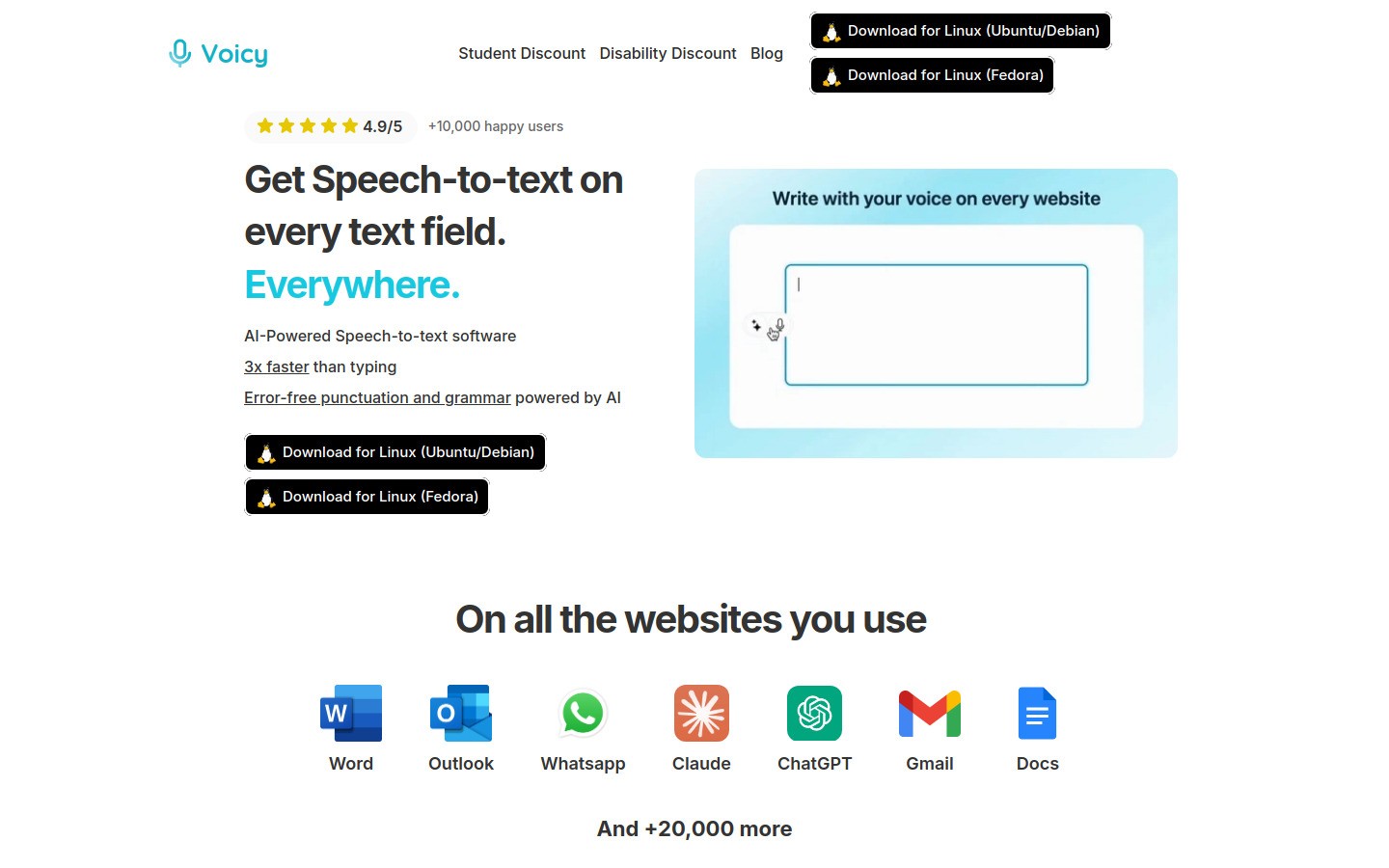
Voicy is the best fit if your workday jumps between therapy documentation and general admin. You can dictate intake summaries in a document, draft an email to a referral partner, clean up case notes in Notion, or speak prompts into ChatGPT without changing tools.
That is the big advantage. Voicy is not trying to be a therapy-specific ambient scribe. It is a fast, flexible dictation layer for real work across Mac, Windows, and the browser. For many therapists, that covers more of the day than session transcription alone.
Best for: everyday dictation across notes, letters, admin tasks, and browser-based tools
Platforms: Mac, Windows, Browser Extension
Pricing: $8.49/month, $82/year, $260 lifetime, free trial available
Why it stands out: works across websites and desktop apps instead of locking you into one clinical workflow
Pros:
Very good for intake notes, referral letters, progress summaries, and admin writing
Works with browser tools like Google Docs, Notion, and ChatGPT
Useful if you want one dictation workflow across your whole stack
Cons:
Not built as a therapy-specific ambient note generator
Cloud-based transcription, so it is not the right pick if you require local-only processing
2. Freed
Freed is one of the strongest options for therapists who want AI help during or right after a session. It is built around ambient documentation, summaries, and lightweight EHR handoff. If your main pain point is finishing notes after client hours, Freed makes sense.
Best for: session-based documentation and review
Strength: flexible notes that adapt to edits over time
Watch out for: still needs review before sign-off
3. Mentalyc
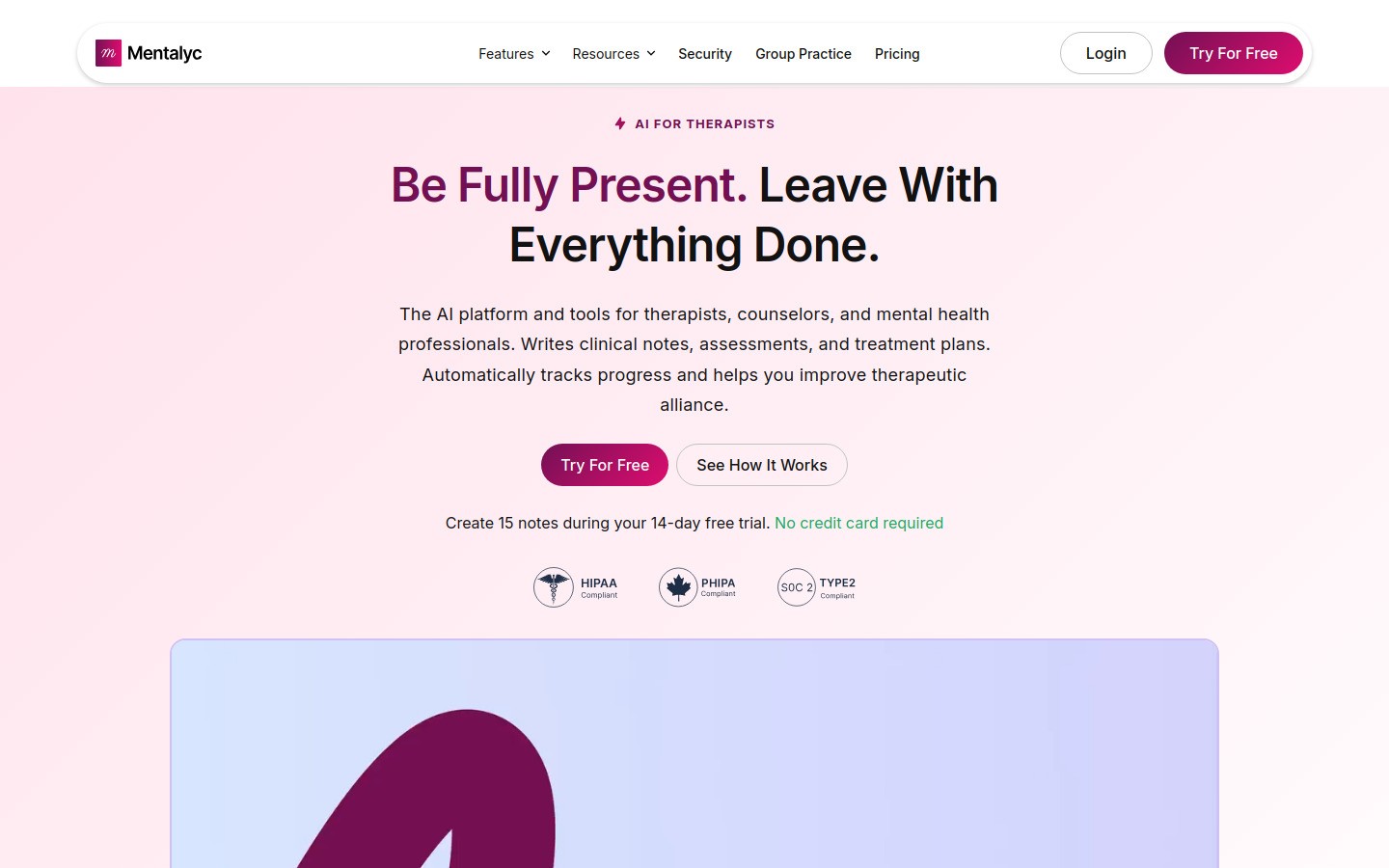
Mentalyc is more therapy-native than most general dictation tools. It supports common note formats, treatment-planning workflows, and mental health-specific language. If you want one platform focused on behavioral health documentation, it is a serious option.
Best for: therapy-focused note generation
Strength: structured note formats and behavioral health workflows
Watch out for: may be more platform than you need if you only want fast dictation
4. Upheal
Upheal is a good fit for therapists who want recordings, transcripts, note drafts, and longer-term review. It can be especially useful for supervisors or practices that want more than just a quick transcript.
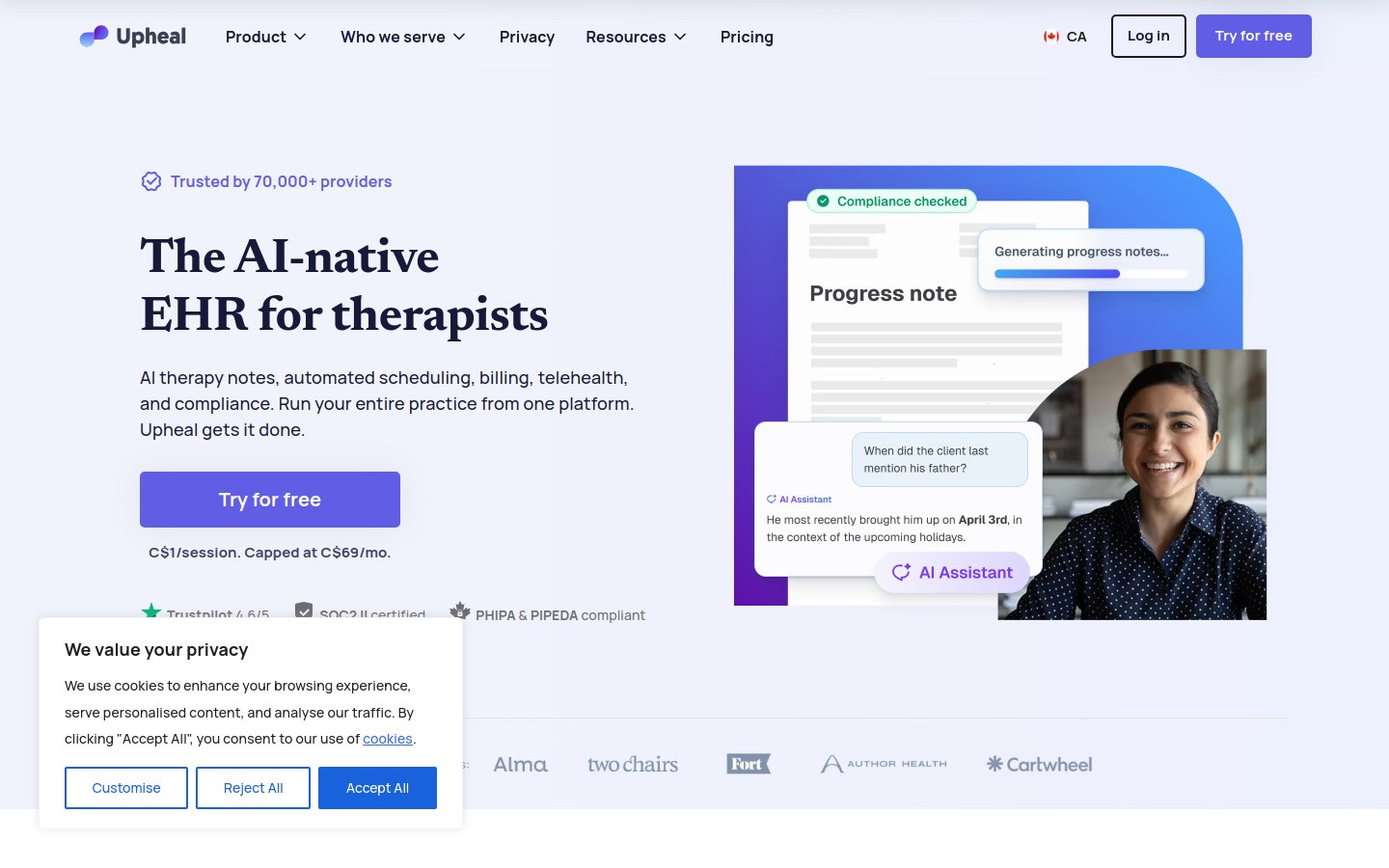
Best for: transcript review and supervision workflows
Strength: more depth than simple voice dictation
Watch out for: heavier product, more cloud storage concerns for some practices
5. AutoNotes
AutoNotes works well if your normal habit is to dictate a short recap after the session. Speak a concise summary, then turn it into SOAP, DAP, or another structured draft. It is simple, which is part of the appeal.
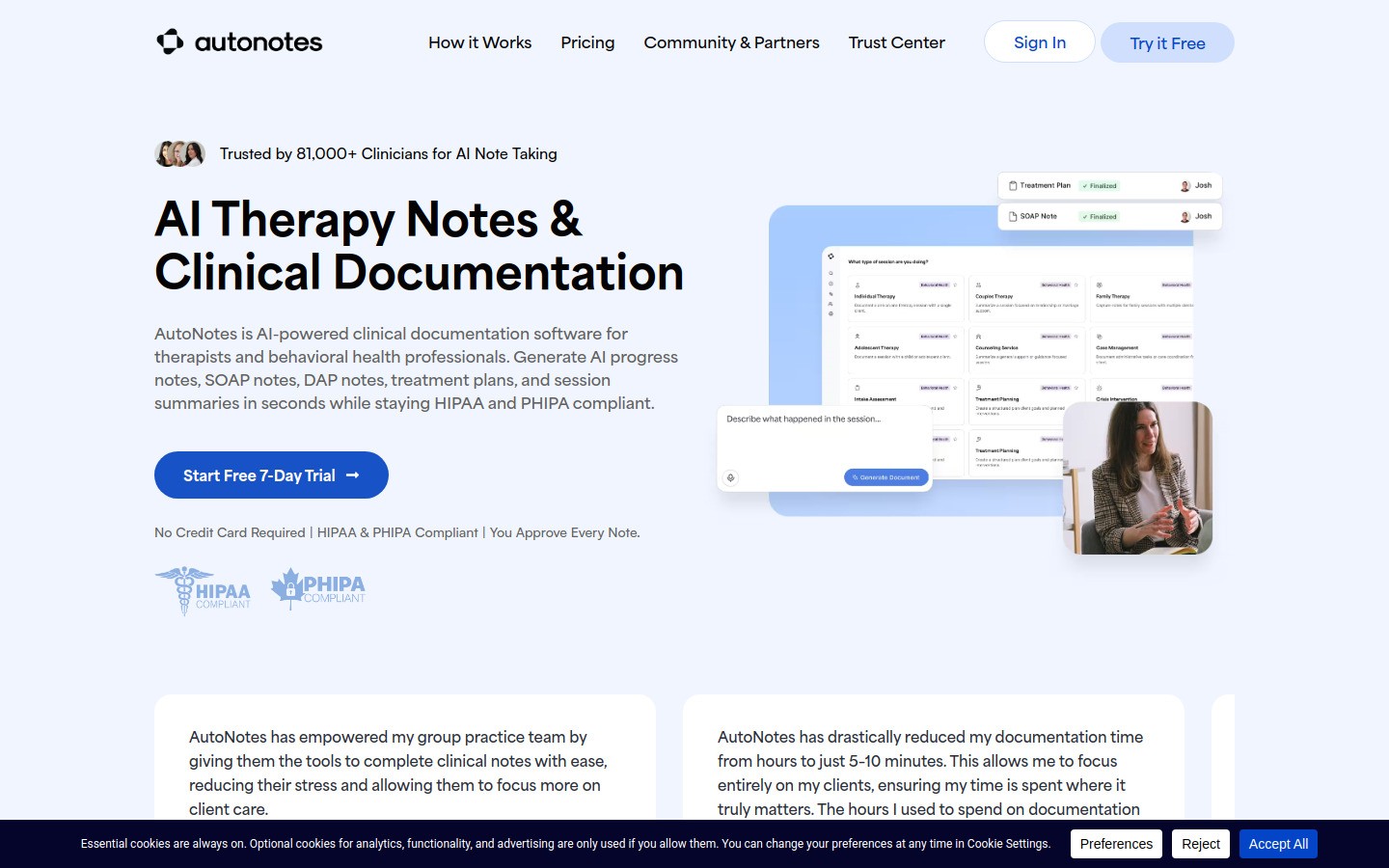
Best for: short post-session recaps
Strength: quick structured drafts
Watch out for: quality depends on how detailed your recap is
6. Heidi Health
Heidi Health is broader than a therapist-only product, but that is not always bad. If you work in a mixed setting, consult with other clinicians, or want a scribe that can stretch beyond therapy use cases, Heidi is worth a look.
Best for: cross-specialty documentation
Strength: flexible ambient capture
Watch out for: less therapy-specific than the focused mental health tools
7. Dragon Medical One
Dragon Medical One is still relevant if you need enterprise medical dictation with deep vocabulary support and a more traditional speech recognition workflow. For large organizations, it can still be a practical answer. For solo therapists, it is often more expensive and heavier than necessary.
Best for: enterprise healthcare environments
Strength: mature medical dictation stack
Watch out for: cost and setup overhead
Which tool is best for which therapy workflow?
For session notes during or after therapy: Freed, Mentalyc, Upheal
For fast recap-based note drafting: AutoNotes
For admin work across docs, email, and browser apps: Voicy
For larger medical organizations: Dragon Medical One
When Voicy makes the most sense
Voicy is strongest when your bottleneck is not only the session note. A lot of therapists also spend time on treatment updates, insurance letters, progress reports, referral outreach, care coordination, follow-up emails, and internal documentation. That work happens all over the place, not in one dedicated AI note app.
If that sounds familiar, start with a broad dictation layer. You can use Voicy to write faster in the tools you already use, then keep a therapy-specific note platform only if you truly need one.
If you want to test that workflow, these pages are a good next step: dictation software, speech to text in Google Docs, Notion speech to text, and speech to text in ChatGPT.
Final verdict
The best dictation software for psychologists and therapists depends on where your time actually goes. If you mainly want AI help with session documentation, therapist-specific tools like Freed, Mentalyc, and Upheal are the right place to start.
If you want a faster way to handle the rest of your documentation workload too, Voicy is the more flexible pick. It is honest about what it is: a cross-platform dictation tool, not a therapy-only scribe. For many private practices, that is exactly why it is useful.


