




Summary of the article
🕒 Flexible schedules - Work during your peak focus hours, not just 9-to-5
📋 Task breakdowns - Split big projects into small, manageable steps with immediate wins
🏢 Workspace modifications - Quiet spaces, noise-canceling headphones, organized desks
💬 Communication structure - Meeting agendas beforehand, written summaries after, clear action items
⏰ Deadline support - Multiple small deadlines instead of one big scary one, plus buffer time
🎯 Focus tools - Website blockers, white noise, apps that protect your attention
⚙️ Role adjustments - Shape your job around strengths, minimize draining tasks
🤝 Support systems - Mentors or coaches who help you navigate workplace challenges
Main article
If you have ADHD, then I know you have faced challenges at work.
And you're not alone in these challenges. The goal of this article is to show you how to improve your productivity and take full advantage of the strengths of an ADHD brain.
Your creativity? Off the charts. Your ability to hyperfocus? Incredible. Your resilience under pressure? Unmatched.
The problem isn't you. It's that most workplaces aren't set up for ADHD brains.
This guide changes that. We're sharing 8 game-changing ADHD accommodations at work that actually work. These aren't just nice ideas - they're practical tools that help you shine at work.
Whether you're asking for help or you're a manager wanting to support your team, this guide has you covered.
What Makes These Accommodations Different?
These aren't about lowering standards. They're about giving you the right tools to succeed.
Think of it like this: You wouldn't ask someone who needs glasses to just "try harder" to see. You'd get them glasses.
That's what these accommodations do for your ADHD brain.
We'll cover four main areas:
Flexible work setups that match your energy
Workspace changes that cut distractions
Communication tweaks that make things clearer
Time and task tools that keep you organized
Ready? Let's dive in.
1. Flexible Work Schedules and Remote Work Options
The 9-to-5 workday? It's ancient history for most ADHD brains.
Your brain might be on fire at 10 PM or super focused at 6 AM. That's totally normal for ADHD.
This accommodation lets you work when your brain works best. It's one of the most powerful ADHD accommodations at work you can ask for.

Why This Works for Your ADHD Brain
Two words: time and environment.
Your ADHD brain has peak hours when everything clicks. Working during those hours is like having superpowers.
Plus, open offices are basically torture chambers for ADHD brains. All that noise and movement? It's exhausting.
Remote work lets you create your perfect workspace. Quiet. Organized. Distraction-free.
Real Companies Doing This Right
Microsoft gets it. They offer 10 AM to 6 PM schedules for neurodivergent employees.
Salesforce gives home office money so you can set up a great workspace.
These companies know flexible doesn't mean lazy. It means smart.
Making It Work for You
Structure is your friend, even with flexibility.
Set clear rules:
Pick core hours when you're available for meetings
Decide how fast you'll respond to messages
Create a daily routine (yes, even with flexible hours)
Create your space:
Pick one spot for work at home
Keep it clean and clutter-free
Make it yours, but keep it professional
Stay connected:
Remote work can feel lonely
Schedule regular check-ins with your team
Join virtual coffee chats or team meetings
Want more ideas for staying engaged while remote? Check out these remote employee engagement ideas.
2. Task and Project Management Modifications
Big projects can feel like climbing Mount Everest in flip-flops when you have ADHD.
Your brain sees this massive thing and just... freezes.
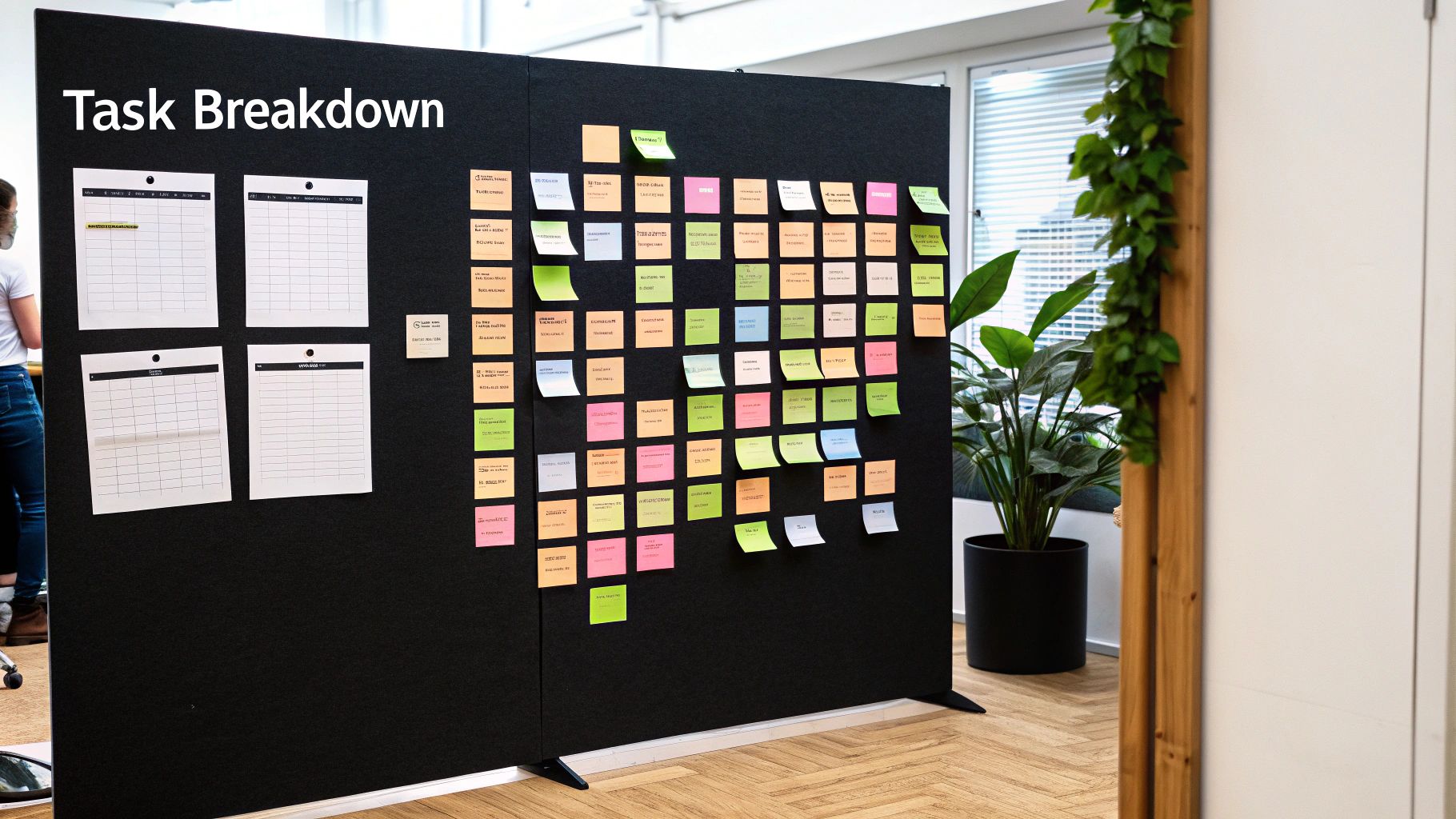
This accommodation breaks everything down into bite-sized pieces. Instead of one giant scary project, you get a bunch of small, doable tasks.
Why Small Steps = Big Wins
Your ADHD brain loves immediate rewards.
Finishing a small task? Boom! Dopamine hit. That feels good, so you want to do it again.
Breaking things down also stops you from holding everything in your head. That's exhausting for anyone, but especially tough for ADHD brains.
Companies Getting This Right
IBM uses "sprints" - short bursts of focused work on specific tasks.
EY gives their consultants visual boards to track progress.
JPMorgan Chase even picked software designed to work well for ADHD brains.
Your Action Plan
Get the right tools:
Try Asana, Trello, or Monday.com
Set up automatic reminders
Use colors to organize different types of tasks
Make it visual:
Color-code by priority or project type
Use charts or boards to see your progress
Celebrate when you finish things (seriously!)
Check in regularly:
Meet with your boss weekly to review progress
Adjust deadlines if you need to
Ask for help before you're overwhelmed
3. Environmental and Workspace Modifications
Open offices might work for some people. For ADHD brains? They're basically chaos factories.
All that noise, movement, and visual clutter? It's like trying to focus while someone's throwing confetti in your face.
This accommodation creates a calm, organized space where your brain can actually focus. It's one of the most important ADHD accommodations at work.

Why Your Environment Matters So Much
Your ADHD brain is always processing everything around you.
That conversation three desks away? Your brain hears it. That person walking by? Your brain sees it. That cluttered desk? Your brain is trying to organize it.
All of this uses up mental energy. Energy you need for actual work.
A calm, organized space lets your brain focus on what matters.
Smart Companies Leading the Way
Google has quiet zones and focus rooms.
SAP gives employees noise-canceling headphones and special lighting.
These companies understand that one workspace doesn't fit all brains.
Creating Your Perfect Space
Start simple:
Get good noise-canceling headphones
Use desk organizers to reduce clutter
Add a privacy screen for your computer
Think about what you see:
Face a wall or calm window view
Avoid high-traffic areas
Keep your desk clear of distracting items
Get organized:
Use colored folders for different projects
Label everything clearly
Have a system and stick to it
Consider getting help:
Ask for a workspace assessment
An occupational therapist can suggest specific changes
Start with small, cheap fixes first
4. Communication and Meeting Accommodations
Meetings can be overwhelming when you have ADHD.
Too much information flying around. People talking over each other. No clear structure.
Your brain is trying to follow everything, but it's like watching five TV shows at once.
This accommodation makes communication clearer and meetings more structured. It's a game-changer for ADHD accommodations at work.

Why Structure Saves Your Brain
Your ADHD brain needs to know what's coming.
An agenda beforehand? That lets you prepare mentally.
Written summaries after? That catches anything you missed.
Multiple ways to participate? That takes the pressure off speaking up on the spot.
Companies Doing Meetings Right
Deloitte always sends agendas ahead of time.
PwC records meetings so people can review them later.
Accenture uses structured meeting formats with clear objectives.
Making Every Meeting Better
Before the meeting:
Ask for an agenda 1-2 days early
Review it so you know what's coming
Prepare any thoughts or questions
During the meeting:
Keep meetings to 30-45 minutes max
Use a timer to stay on track
Take notes or use chat to contribute ideas
After the meeting:
Get a written summary within 24 hours
Make sure action items are clear
Follow up if something wasn't clear
Pro tip: Need better note-taking strategies? These effective note-taking methods can help your whole team.
5. Time Management and Deadline Accommodations
"Time blindness" is real for ADHD brains.
You think something will take an hour. It takes four. Or you have two weeks for a project, but it feels like it's due "someday in the future" until suddenly it's due tomorrow.
This accommodation gives you buffer time and breaks big deadlines into smaller ones.
Why Traditional Deadlines Don't Work
Your ADHD brain has trouble judging time.
Far-off deadlines feel abstract and fake. You know it's important, but it doesn't feel urgent.
Then panic mode kicks in at the last minute. That's exhausting and stressful.
Better approach: Multiple small deadlines instead of one big scary one.
Companies Getting Deadlines Right
Ernst & Young focuses on project milestones instead of rigid end dates.
Hewlett Packard Enterprise builds buffer time into all projects.
These companies know that realistic timelines lead to better work.
Your Time Management Strategy
Work backwards:
Take your final deadline
Break it into smaller pieces
Give each piece its own mini-deadline
Add buffer time:
Whatever you think something will take, add 20-30%
This isn't pessimistic - it's realistic
It accounts for unexpected hiccups
Use tools that help:
Block time on your calendar for deep work
Set multiple reminders for each milestone
Try specialized ADHD time management tools
Check in regularly:
Schedule brief meetings with your supervisor
These aren't micromanaging - they're accountability
Use them to adjust timelines if needed
6. Focus and Attention Support Tools
Your phone buzzes. Slack pings. Someone walks by your desk.
For ADHD brains, every interruption is like a train derailment. Getting back on track takes serious mental energy.
Focus tools help you create a distraction-free zone. They're essential ADHD accommodations at work for the digital age.
Why Tech Can Be Your Friend
These tools act like a shield for your attention.
Website blockers stop you from accidentally wandering to social media.
Focus apps help you stay on task.
White noise drowns out distracting sounds.
Think of them as training wheels for your focus.
Companies Investing in Focus
Amazon provides focus apps for warehouse workers with ADHD.
Shopify created focus rooms with attention-support technology.
Intel offers mindfulness and focus training programs.
Building Your Focus Toolkit
Start small:
Pick one tool and master it first
Don't overwhelm yourself with too many apps
Build the habit before adding more
Control your digital environment:
Turn off non-essential notifications
Use website blockers during work hours
Keep your phone in another room if needed
Experiment with sound:
Try white noise, brown noise, or binaural beats
Some ADHD brains focus better with music
Others need complete silence
Track what works:
Notice when you feel most focused
Use an app or simple journal to track patterns
Schedule hard tasks during your best focus times
Want more focus tools? Check out these ADHD productivity tools that really work.
7. Job Role and Responsibility Modifications
What if instead of forcing you into a rigid job box, your employer shaped the job around your strengths?
That's what this accommodation does.
It's about maximizing what you're amazing at (creativity, problem-solving, hyperfocus) and minimizing what drains you (repetitive admin tasks, endless data entry).
Why This Changes Everything
ADHD brains have an uneven skill set.
You might be incredible at creative problem-solving but terrible at filing expense reports.
Instead of struggling with your weak spots, this lets you play to your strengths.
Result? Better work, higher satisfaction, less stress.
Companies Reshaping Roles
Microsoft customizes software engineer roles to focus on deep coding instead of presentations.
3M lets creative employees pursue innovative ideas with lots of autonomy.
These companies know that one-size-fits-all jobs waste talent.
Making Role Changes Work
Know your strengths and challenges:
What tasks make you feel energized?
What tasks make you want to hide under your desk?
Be honest about both
Start small:
Trade a few small tasks with a coworker
See how it goes before making big changes
Keep the core parts of your job intact
Make it official:
Update your job description
This protects both you and your employer
Everyone knows what to expect
Review regularly:
Schedule check-ins to see how it's working
Be willing to adjust if needed
This is an ongoing process, not a one-time fix
8. Structured Support and Coaching Systems
Sometimes you need more than just accommodations. You need a guide.
Structured support gives you a mentor, coach, or support group to help you navigate workplace challenges.
It's like having a GPS for your career.
Why External Support Works
Your ADHD brain is working extra hard just to function in a neurotypical world.
Having someone in your corner helps you:
Build missing skills
Solve problems as they come up
Feel less alone in your struggles
Companies Creating Support Networks
IBM has neurodiversity mentoring circles.
Johnson & Johnson has dedicated ADHD employee resource groups.
These programs show that companies are investing in long-term success, not just quick fixes.
Building Your Support System
Set clear goals:
What specific skills do you want to build?
What challenges do you want to solve?
How will you measure success?
Find the right person:
Look for someone who understands ADHD
They don't need to have ADHD themselves
They do need to be patient and supportive
Keep it confidential:
You need to feel safe discussing challenges
Make sure conversations won't hurt your career
Trust is essential
Connect it to your growth:
This isn't remedial help
It's professional development
Frame it as investing in your future
Quick Comparison: Which Accommodations Fit Your Needs?
Accommodation | How Hard to Set Up | What You Need | What You Get | Best For |
|---|---|---|---|---|
Flexible Work | Medium | Scheduling coordination | Better focus times | People with energy cycles |
Task Management | Medium | Planning tools | Less overwhelm | Project-heavy roles |
Workspace Changes | Medium | Equipment/space | Fewer distractions | Open office workers |
Communication Help | Medium | Team buy-in | Better understanding | Meeting-heavy jobs |
Time Management | Medium | Coaching/tools | Less stress | Deadline-driven work |
Focus Tools | Easy | Apps/software | Immediate focus boost | Distraction-prone people |
Role Changes | Hard | Management support | Job satisfaction | Flexible positions |
Support Systems | Hard | Ongoing programs | Long-term growth | Everyone |
Your Next Steps: Building a Better Work Life
Here's the truth: You don't have to struggle at work because of ADHD.
These ADHD accommodations at work aren't about getting special treatment. They're about getting the right tools to show what you can really do.
For Employees: How to Ask for What You Need
Know yourself first:
Which of these accommodations spoke to you?
What are your biggest workplace challenges?
What would make the biggest difference?
Start the conversation:
Approach your manager with solutions, not just problems
Be specific about what you need
Explain how it will help your performance
Remember:
Asking for accommodations is smart, not weak
You're advocating for your success
Most managers want to help good employees succeed
For Managers: How to Support Your Team
Be proactive:
Don't wait for someone to ask for help
Learn about neurodiversity in the workplace
Create a culture where these conversations are normal
Stay open-minded:
These changes often help everyone, not just ADHD employees
Focus on outcomes, not methods
Small adjustments can make huge differences
Make it systematic:
Include neurodiversity in your recruitment strategy
Check out these strategies for diversity and inclusion in recruitment
Build accommodations into your standard processes
The Bigger Picture: Why This Matters
When ADHD employees get the right support, amazing things happen.
Productivity soars. Job satisfaction increases. Turnover drops.
But it's not just about the numbers. It's about creating a workplace where every brain can thrive.
Information Overload? We Get It
Feeling overwhelmed by all this information? That's totally normal for ADHD brains.
Take it one step at a time. Pick one accommodation that resonates with you. Try it. See how it goes.
If you're struggling with too much information in general, these strategies to manage information overload might help.
For the broader legal overview, read our guide to whether ADHD is considered a disability, including how ADA protections depend on functional limits, not diagnosis alone.
The Future is Neuro-Inclusive
The old way of working - rigid schedules, one-size-fits-all offices, sink-or-swim expectations - is dying.
The future belongs to companies that understand different brains work differently.
And that's good news for everyone.
Start Your Journey Today
You don't have to wait for your company to change. You can start advocating for yourself right now.
Pick one accommodation from this list. Think about how it could help you. Then have that conversation with your manager.
Every great workplace transformation starts with a single conversation.
Ready to take control of your work communication?
Voicy helps you turn your thoughts into clear, organized text instantly. No more struggling with emails or meeting notes. Just speak naturally, and Voicy handles the rest - with perfect punctuation and grammar.
Whether you're taking notes in meetings, drafting important emails, or documenting your ideas, Voicy reduces the cognitive load so you can focus on what matters most.
Try Voicy today and transform how you communicate at work.


