



Best Dictation Software for Physical Therapists in 2026
Summary of the article
ScribePT is the best fit for PT clinics that want an AI scribe built around rehab workflows and EMR handoff.
ezPT is strong if you want browser-based PT documentation with autofill and template control.
SOAPNoteAI is the easiest pick for quick voice dictation that turns into SOAP notes.
Dragon Medical One is still a serious option for enterprise healthcare teams, but it is expensive and heavier to set up.
Voicy is the best fit for PTs who want fast dictation for emails, home exercise instructions, letters, and other non-PHI writing across apps.
If you need patient-session capture, SOAP formatting, and EMR-friendly workflows, pick a PT-specific tool. If you mainly want to cut typing in everyday work, a general dictation app can be enough.
Best Dictation Software for Physical Therapists in 2026
Physical therapists do not just write notes. You document evaluations, progress notes, home exercise updates, referral letters, insurance justifications, and a pile of follow-up messages.
That is why the best dictation software for physical therapists is not always the same as the best voice typing app overall. Some tools are built for SOAP notes and clinic workflows. Others are better for fast writing in normal desktop apps.
To make this useful, I looked at PT-specific documentation tools first, then compared them with broader dictation options. I also checked where this fits with existing Voicy content for medical professionals, so this page stays PT-specific instead of repeating the generic medical angle.
How we picked these tools
PT workflow fit: Can it handle SOAP notes, evals, and treatment documentation?
Speed: Does it reduce end-of-day charting, not just move the work around?
Ease of use: Can a busy clinic actually adopt it without a painful rollout?
Flexibility: Does it work inside an EMR, beside an EMR, or across normal desktop apps?
Value: Is the pricing reasonable for solo PTs and growing clinics?
Quick comparison table
Tool | Best for | Style | Starting price | Main tradeoff |
|---|---|---|---|---|
PT clinics that want AI scribing | Ambient AI scribe | Custom quote | Less transparent pricing | |
PT teams that want EMR-side documentation help | Recording, dictation, autofill | Free trial | More clinic-specific than general-purpose | |
Solo PTs and small teams | Dictation plus SOAP formatting | $69/month | Narrower feature set outside note workflows | |
Large healthcare orgs | Medical dictation | Usually custom or enterprise pricing | Expensive and heavier to deploy | |
Everyday writing outside patient-note capture | Cross-app AI dictation | $8.49/month | Not a PT-specific charting platform |
1. ScribePT, best for PT clinics that want AI scribing built for rehab workflows
ScribePT is the strongest fit when your main problem is clinical documentation. It is purpose-built for PT, OT, and SLP teams, and its positioning is much closer to “get my notes done faster” than “general voice typing tool.”
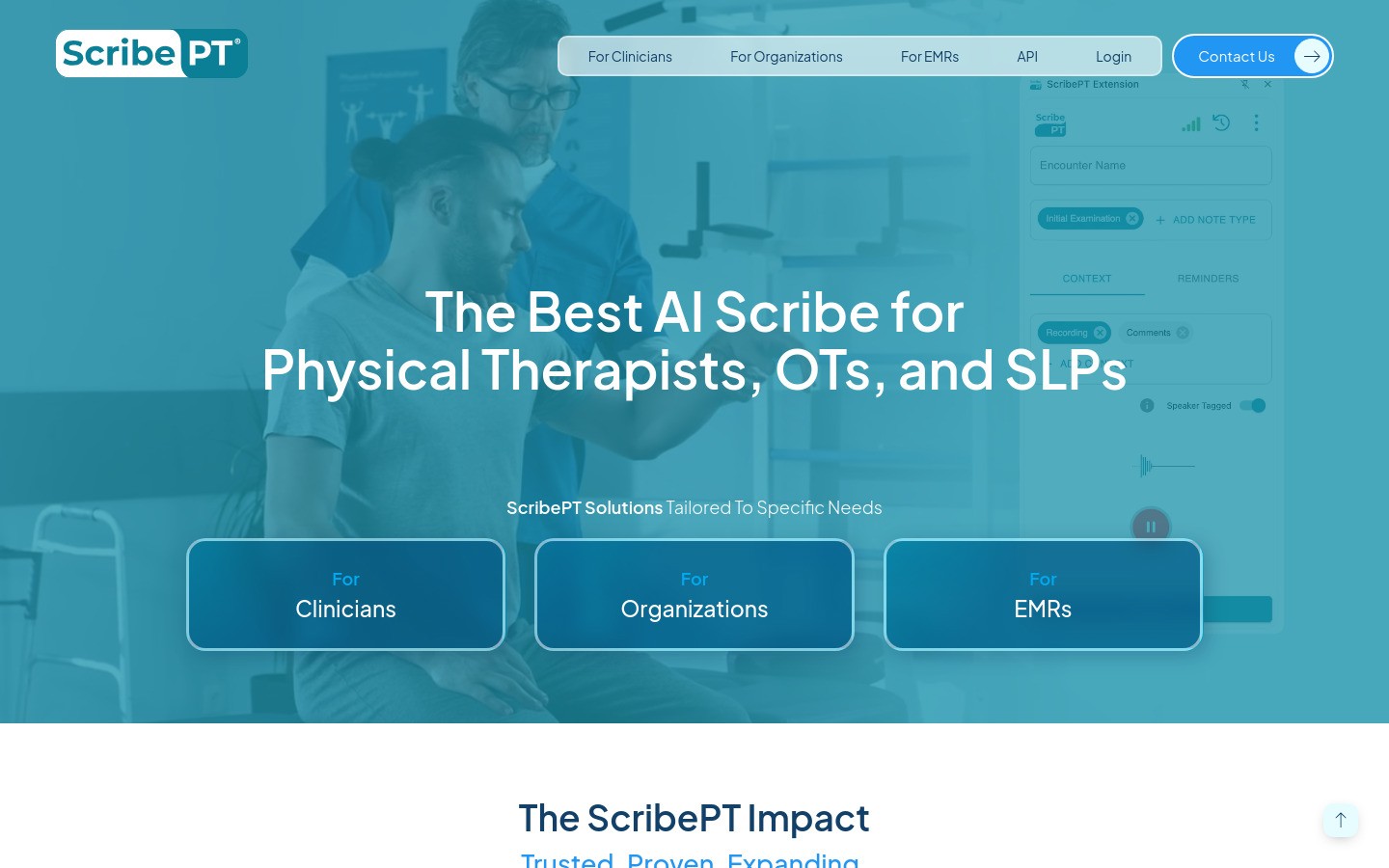
What stood out in the research was how often ScribePT talks about saving clinicians hours per week and working with existing EMRs instead of trying to replace them. That is the right pitch for most PT clinics.
Why PTs like it:
Built around therapy documentation, not generic business dictation.
Works alongside many EMRs.
Strong fit for evals, progress notes, and busy outpatient schedules.
Testimonials focus on getting evenings and weekends back.
Downside: Pricing is not public, so it is harder for solo PTs to compare quickly.
Best for: Private PT clinics, rehab groups, and home health teams that want AI note help with a clinical workflow focus.
2. ezPT, best for PT teams that want AI documentation plus EMR autofill
ezPT is another PT-specific option, but it leans harder into workflow automation. It offers recording, dictation, SOAP note drafting, and EMR autofill.
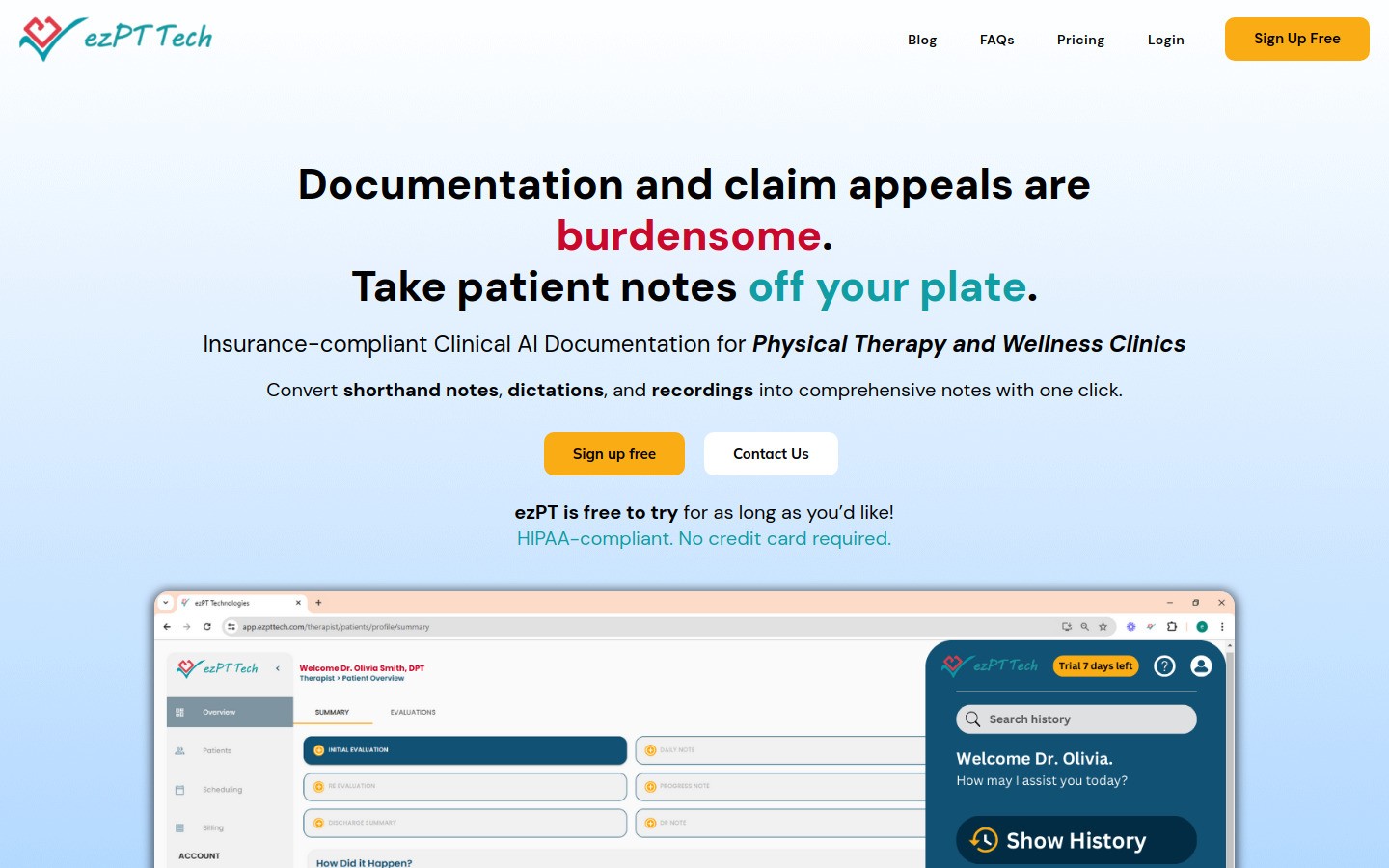
That matters because a lot of PTs do not just hate typing. They hate typing, retyping, clicking through fields, and copying notes into a second system.
Why PTs like it:
Focused on physical therapy and wellness clinics.
Can turn recordings and shorthand into fuller SOAP notes.
Browser extension workflow is useful for web-based systems.
Strong pitch around reducing unpaid charting time.
Downside: It is more specialized. If you only want clean voice typing in normal desktop apps, ezPT may feel heavier than you need.
Best for: PT clinics that want documentation help inside a structured workflow, not just a speech-to-text box.
3. SOAPNoteAI, best for quick dictation that becomes PT SOAP notes
SOAPNoteAI is a simpler choice. It is aimed at physical therapists who want three things: real-time AI scribing, quick voice dictation, and shorthand expansion into proper SOAP documentation.
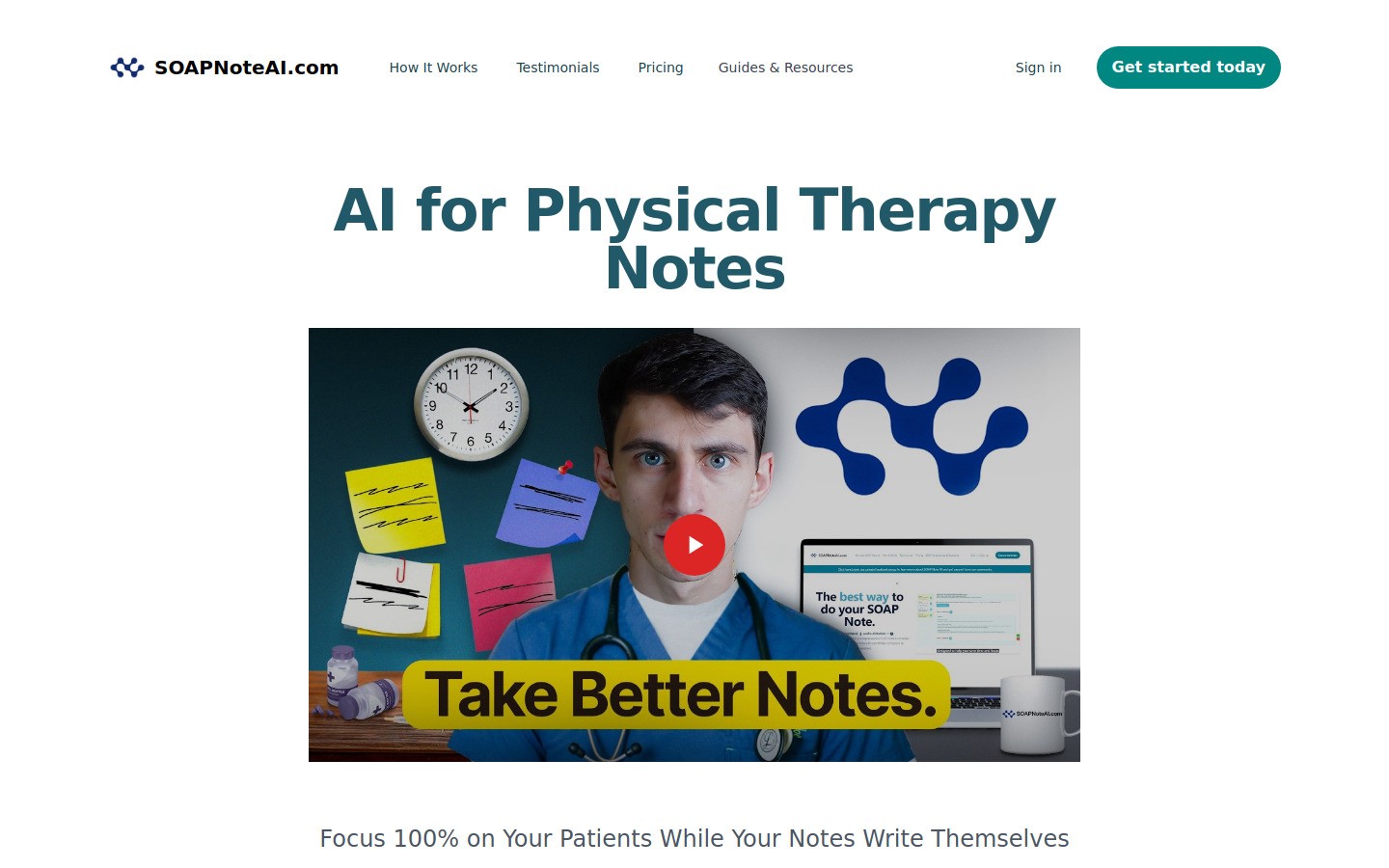
This makes it appealing for solo clinicians or smaller clinics that do not want a giant rollout. The pricing is also more visible than some enterprise tools, with plans starting at $69 per month for audio notes and dictation.
Why PTs like it:
Made for PT note workflows, not generic office dictation.
Quick dictation mode is useful between patients.
SOAP structure is part of the product story.
Works across laptop, tablet, and phone workflows.
Downside: It looks best for note generation. It is not the broadest all-day writing tool on this list.
Best for: Solo PTs, cash-based practices, and small teams that want faster notes without enterprise complexity.
4. Dragon Medical One, best for enterprise healthcare dictation
Dragon Medical One is still a serious name in medical dictation. If you work inside a bigger healthcare system, Dragon will show up in the shortlist almost every time.
It is strong on medical vocabulary and established healthcare workflows. But for many independent PT clinics, it can be more tool, more cost, and more setup than they really need.
Why PTs like it:
Well-known healthcare dictation brand.
Strong medical terminology support.
Often chosen by larger orgs with compliance and IT requirements.
Downside: It is rarely the cheapest or easiest option. Smaller PT teams may get better value from PT-specific AI scribes.
Best for: Hospital systems, enterprise rehab groups, and clinics already operating in a larger Microsoft or Nuance-style healthcare setup.
5. Voicy, best for PTs who want fast writing across apps
Voicy is different from the other tools here. It is not trying to be a PT note platform. It is a fast dictation app for Mac, Windows, and browser workflows.
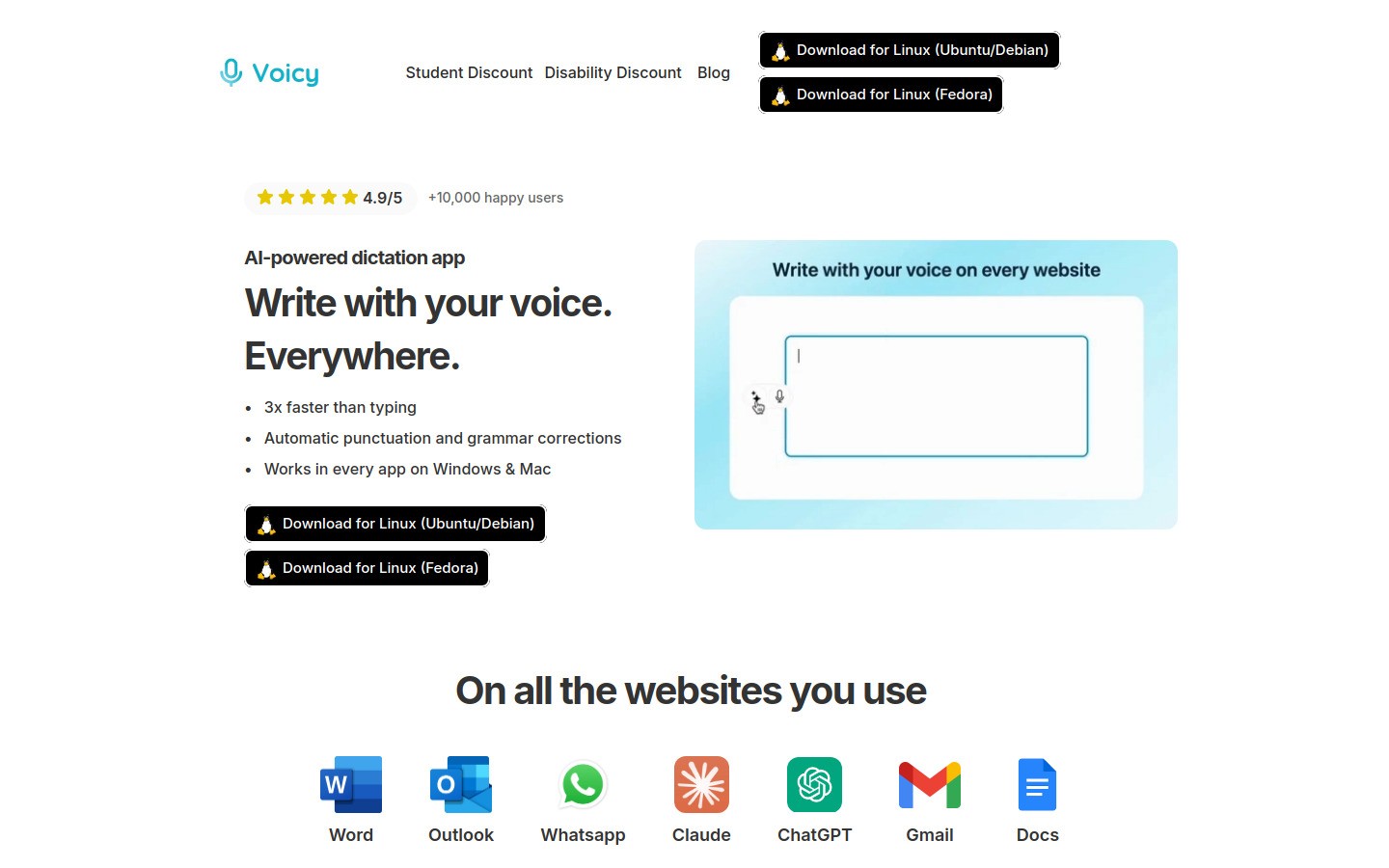
That makes it a smart pick for physical therapists who spend a lot of time writing outside the chart. Think emails, patient instructions, referral letters, staff messages, website copy, or home exercise explanations drafted in normal text fields.
Why PTs like it:
Works across Mac, Windows, and browser extension workflows.
Simple pricing: $8.49/month, $82/year, or $260 lifetime.
Automatic punctuation and AI commands help clean up drafts fast.
Useful in Gmail, docs, web forms, and other everyday tools.
Downside: Voicy is not a PT-specific documentation system. If your main job is capturing patient sessions and turning them into SOAP notes, the PT-focused tools above are a better fit.
Best for: PTs who want to reduce typing across everyday work, especially outside patient-note capture. If that sounds like you, the main Voicy app, the Chrome extension, and the broader dictation software page are the best next steps.
Which type of dictation software should a physical therapist choose?
There are really two buckets here.
Choose a PT-specific AI scribe if you need:
SOAP note generation
Eval and progress-note support
Clinic workflows tied to an EMR
Less screen time during patient visits
Choose a general dictation app if you need:
Fast writing in normal apps
Email and admin help
Simple cross-device voice typing
A lower-cost option for daily writing
This is the big reason broad “best dictation software” lists often miss the mark for PTs. A clinic note workflow and a front-desk writing workflow are not the same thing.
What physical therapists should look for before buying
1. SOAP note support
If the tool does not help with SOAP structure, you may still save typing time, but not much charting time.
2. EMR handoff
Ask how the note gets into your record system. Copy and paste is fine for some solo PTs. Growing clinics usually want something smoother.
3. Between-patient speed
The best PT dictation tool should work in short gaps, not only in long setup-heavy sessions.
4. Non-clinical writing support
PTs still spend time on letters, follow-ups, and instructions. A tool that helps with both charting and admin work can save more time overall.
5. Honest pricing
Custom pricing is common in healthcare software, but visible pricing makes it much easier to compare options quickly.
My honest recommendation
If your biggest pain is clinical notes, start with ScribePT, ezPT, or SOAPNoteAI. They are simply closer to how PT clinics actually work.
If your biggest pain is all the other writing around the job, not just charting, Voicy is the best value on this list. It will not replace a PT documentation platform, but it can save a lot of typing time in the rest of your day.
And if you are comparing broader healthcare options too, this companion guide on dictation software for medical professionals is the right next read.
FAQ
What is the best dictation software for physical therapists?
The best dictation software for physical therapists depends on the job. For PT documentation and SOAP notes, tools like ScribePT, ezPT, and SOAPNoteAI are better fits. For general writing across apps, Voicy is a better value.
Do physical therapists need a PT-specific dictation tool?
Not always. If most of your typing happens in patient documentation, yes, PT-specific tools usually make more sense. If most of your typing is emails, instructions, letters, and admin work, a general dictation app may be enough.
Can dictation software help with SOAP notes?
Yes, but not every tool does it the same way. PT-specific tools often build SOAP formatting into the workflow. General voice typing tools usually just turn speech into text and leave the structure to you.
Is Dragon Medical One good for physical therapists?
Yes, especially in larger healthcare organizations. But it can be too expensive or heavy for small PT clinics that only need faster documentation.
Is Voicy good for physical therapists?
Voicy is good for physical therapists who want fast dictation in normal apps like Gmail, web forms, documents, and browser tools. It is a strong fit for non-clinical writing and general productivity. It is not a PT-specific SOAP note platform.
What should PT clinics ask on a demo?
Ask how the tool handles SOAP notes, progress notes, evals, EMR handoff, pricing, and how much editing is still needed after a session.
Can dictation software reduce documentation burnout?
Yes. The biggest savings usually come when the tool matches your workflow. A PT-specific scribe helps most with charting. A general dictation app helps most with all the writing that happens outside the chart.
What is the cheapest option on this list?
Voicy has the lowest published entry price on this list at $8.49 per month, or $82 per year. PT-specific clinic tools usually cost more because they do more.
Want a broader comparison before you decide? Start with Voicy’s voice typing app guide, then compare that with the PT-specific tools above.


